01
Roll
Roll the dice on your turn. All sixes lets you roll again and add those dice.

Board game
Roll. Race. Capture your way home.
A free-for-all race. Bring four tokens out of the yard, move them around the track, and get them home before everyone else.
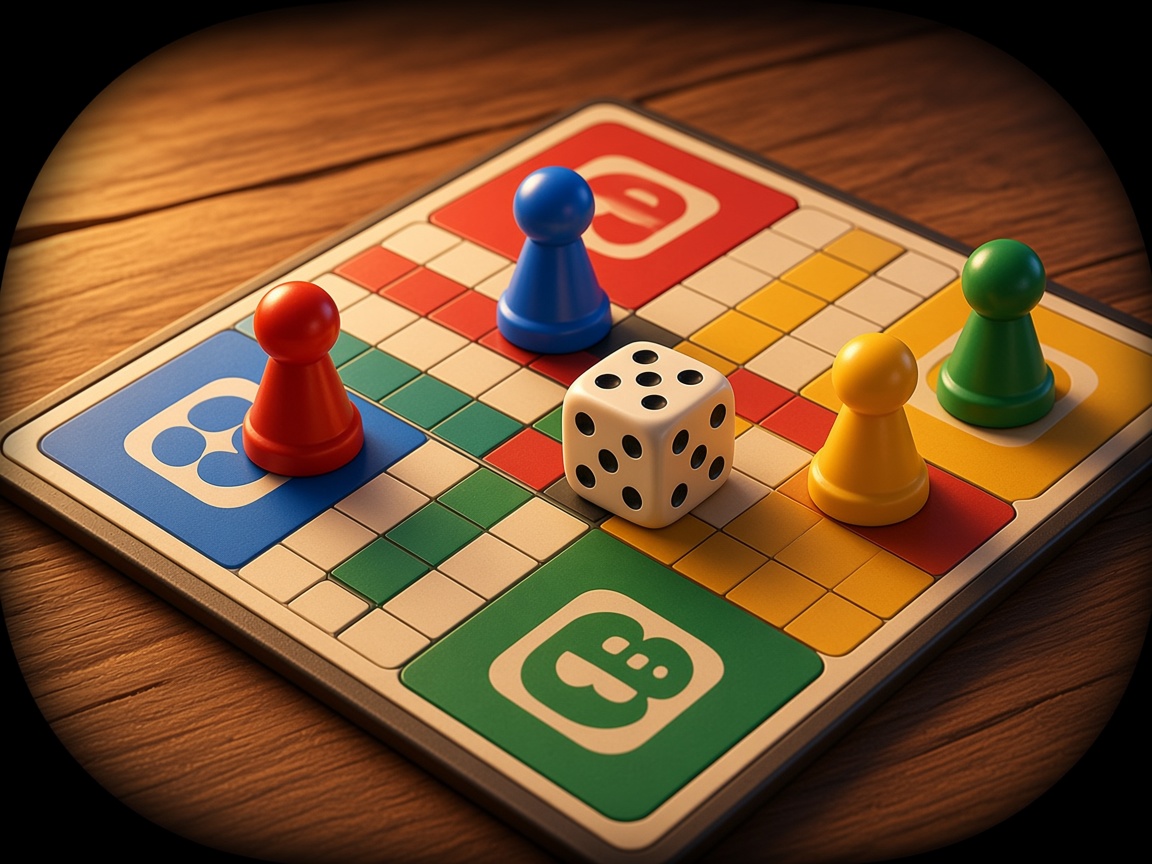
You roll, then walk your tokens from your corner toward home. Land on someone and they go back to the yard, while the token that caught them is done.
Everyone plays for themselves. The first to finish all four tokens wins.
One turn, from the roll to the tokens still on the track.
01
Roll the dice on your turn. All sixes lets you roll again and add those dice.
02
A 6 brings a token out of the yard onto your start square.
03
Spend each die on a token, or add dice together for one longer move.
04
Land on a rival and that token goes back to its yard. Yours finishes.
05
Turn into your colour’s column. The last step has to be exact.
06
Get every token home. By default the others keep racing for places.
Four corners, one shared track, and a private path home for each colour.
Colours
Each colour plays from its own corner.
Each colour starts with four tokens off the board. A 6 is what brings one out.
52 shared squares, clockwise from your own start. No square is safe, including the starts.
Two dice by default. Use them one at a time, or add them for a single landing.
You take one rival on that square. They return to the yard. Your token leaves the board, finished.
After the track, a private column. Only an exact count steps into home.
They can share a square. They never block each other, and they never capture each other.
What the server accepts. Open a group for the detail.
One ruleset. The host sets these in the lobby before the race starts.
2, 3, or 4. One person per colour. A new room opens four seats.
1, 2, 3, or 4. Two is the default. Only an all-sixes roll earns another roll.
Per roll, per turn, or a time bank. Per roll starts at 30 seconds. Off means no clock.
On by default. The first player to finish still wins, and the others race for 2nd, 3rd, and 4th. Off ends the game at the first finish.
Only with exactly two players. Each person plays two colours, eight tokens, from one roll.
Two players start in opposite corners. The host can put them side by side, or pair two colours as opposites or neighbours.
Classic, Walnut, or Marble. The look changes. The track does not.
Empty seats can be bots. Easy picks any legal move. Every other level plays the same plan: capture, get home, come out, stay safe. Higher levels only wait less.
A small table. Extra people can watch.
Two to four players, one colour each. Bots can fill the empty seats. Bot speed only changes how long they wait before they move.
Up to eight people can watch. They see the board and the dice. They cannot roll or move a token.
Watchers, and anyone already finished or out, can call the winner. That closes once any player is one token from finishing.
Finish your tokens. Places follow if the table is still racing.
A token is home when it steps in on an exact count, or when it captures. The first player to finish every token wins.
With play-on, the others keep going for 2nd, 3rd, and 4th. If the race stops early, whoever has travelled further ranks higher. An equal distance shares the place.
A clock still plays your turn. Three missed turns in a row put you out, and so does an empty time bank. With nobody left to race, the game ends.
Start a public game and jump in.